Isotretinoin 20mg is a powerful oral medication widely used to treat severe acne, especially when other treatments fail. Known by brand names like Accutane, this drug has transformed the lives of many people struggling with persistent acne. However, like any strong medication, it comes with a range of side effects that users should clearly understand before starting treatment.
This guide explains the most common side effects of Isotretinoin, why they happen, and how to manage them safely.
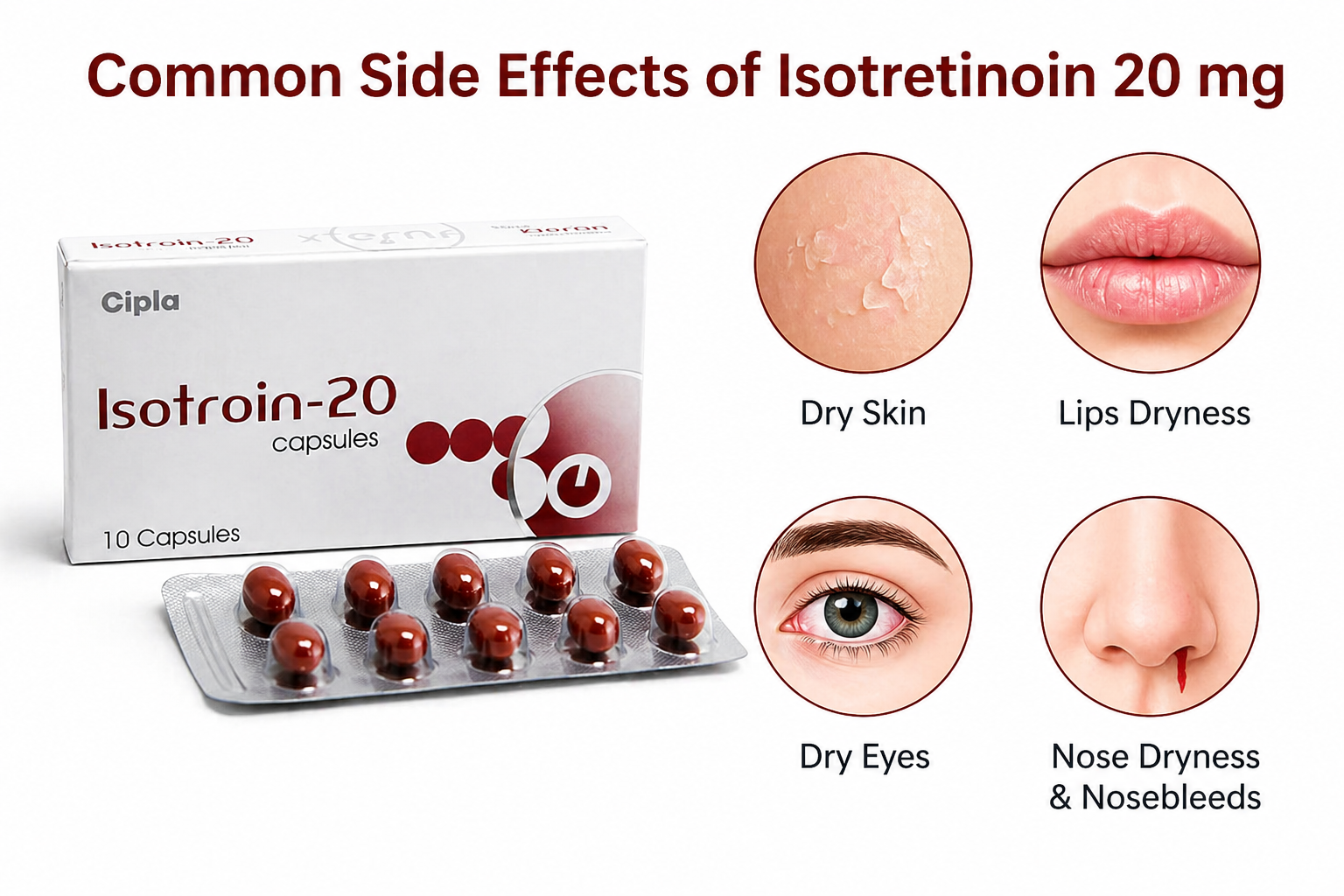
The most common side effects of isotretinoin include dry skin, chapped lips, dry eyes, nosebleeds, joint pain, and increased sensitivity to sunlight. These effects occur because the medication reduces oil production in the skin.
Why Does Isotretinoin Cause Side Effects?
Isotretinoin works by shrinking the sebaceous (oil) glands and reducing sebum production. While this helps prevent acne, it also removes the skin’s natural moisture barrier, leading to dryness and irritation.
Additionally, isotretinoin affects cell turnover and inflammation, which can trigger other systemic side effects.
Most Common Side Effects of Isotretinoin
1. Dry Skin and Peeling
This is the most reported side effect. You may notice:
- Flaky skin
- Tightness or irritation
- Peeling, especially around the nose and mouth
Why it happens: Reduced oil production dries out the skin.
Tip: Use a gentle, fragrance-free moisturizer daily.
2. Chapped Lips (Cheilitis)
Almost everyone taking Isotretinoin experiences dry, cracked lips.
- Lips may become sore or bleed
- Lip balm becomes essential
Tip: Apply a hydrating lip balm frequently throughout the day.
3. Dry Eyes and Vision Issues
Isotretinoin can reduce tear production, leading to:
- Eye dryness
- Irritation or redness
- Difficulty wearing contact lenses
In some cases, people report night vision problems.
Tip: Use lubricating eye drops if needed.
4. Nosebleeds (Epistaxis)
Dry nasal passages can lead to:
- Frequent nosebleeds
- Nasal irritation
Why it happens: The inner lining of the nose becomes dry and fragile.
Tip: Apply a small amount of petroleum jelly inside the nostrils.
5. Sun Sensitivity
Your skin becomes more sensitive to UV rays while on Isotretinoin.
- Higher risk of sunburn
- Redness after minimal sun exposure
Tip: Use sunscreen (SPF 30+) and avoid prolonged sun exposure.
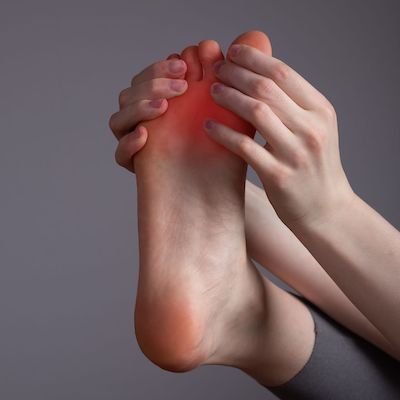
6. Joint and Muscle Pain
Some users experience:
- Mild joint stiffness
- Muscle soreness, especially after exercise
This side effect is more common in physically active individuals.
7. Acne Flare-Ups (Initial Breakout)
In the early weeks, acne may temporarily worsen before improving.
Why it happens: The medication brings underlying acne to the surface.
Good news: This phase is temporary and usually improves within weeks.
8. Hair Thinning
Some people report mild hair shedding while taking isotretinoin.
- Usually temporary
- Hair growth returns after treatment ends
9. Headaches
Mild headaches can occur, though they are usually manageable.
Important: Severe or persistent headaches should be reported to a doctor.
10. Changes in Blood Lipids and Liver Function
Isotretinoin can affect internal health, including:
- Increased cholesterol levels
- Elevated liver enzymes
This is why regular blood tests are required during treatment.
Less Common but Serious Side Effects
While rare, some side effects require immediate medical attention:
- Severe abdominal pain
- Vision changes
- Mood changes or depression
- Allergic reactions
Always consult a healthcare provider if unusual symptoms occur.
Who Is at Higher Risk of Side Effects?
Certain individuals may experience stronger reactions:
- People with sensitive skin
- Those with pre-existing liver conditions
- Individuals with high cholesterol
- Patients taking other medications
Pregnant women must never use isotretinoin due to a high risk of birth defects.
How to Manage Isotretinoin Side Effects
Here are practical tips to reduce discomfort:
Skincare Tips
- Use a gentle cleanser
- Apply moisturizer twice daily
- Avoid harsh exfoliants
Lifestyle Tips
- Stay hydrated
- Avoid alcohol (to protect the liver)
- Use sunscreen daily
Medical Monitoring
- Regular blood tests
- Follow prescribed dosage
- Report unusual symptoms early
Benefits vs. Side Effects: Is It Worth It?
Despite its side effects, Isotretinoin is considered one of the most effective treatments for severe acne.
Many patients experience:
- Long-term acne clearance
- Reduced scarring
- Improved confidence
For most users, the side effects are manageable and temporary compared to the long-term benefits.
FAQs
1. What is the most common side effect of isotretinoin?
The most common side effect is dry skin and chapped lips, experienced by nearly all users.
2. How long do isotretinoin side effects last?
Most side effects last throughout the treatment period and gradually disappear after stopping the medication.
3. Does isotretinoin cause permanent damage?
In most cases, side effects are temporary. Serious long-term effects are rare when taken under medical supervision.
4. Can isotretinoin affect mental health?
Some users report mood changes, but the link is still debated. Always monitor your mental health and consult a doctor if needed.
5. Is hair loss from isotretinoin permanent?
No, hair thinning is usually temporary, and normal growth resumes after treatment ends.
6. Can I wear makeup while taking isotretinoin?
Yes, but use non-comedogenic and hydrating products to avoid further irritation.
7. Why does acne get worse before improving?
This is called a purging phase, where underlying acne surfaces before healing begins.
8. How can I reduce dryness while on isotretinoin?
Use moisturizers, lip balm, and drink plenty of water daily.
9. Is isotretinoin safe for everyone?
No, it is not suitable for pregnant women or individuals with certain health conditions.
10. Do I need regular tests during treatment?
Yes, doctors usually recommend blood tests to monitor liver function and cholesterol levels.
11. Can I drink alcohol while taking Isotretinoin?
It’s best to limit or avoid alcohol during treatment. Both isotretinoin and alcohol can affect the liver, increasing the risk of liver strain and elevated enzymes.
12. Does Isotretinoin cause weight gain?
Weight gain is not a common side effect. Most users do not experience significant changes in weight while taking isotretinoin.
13. Can I exercise while on Isotretinoin?
Yes, but some people may experience muscle or joint pain. It’s recommended to avoid intense workouts if discomfort occurs and listen to your body.
Isotretinoin is a highly effective solution for stubborn acne, but it requires careful use and awareness of its side effects. Most side effects—like dryness and irritation—are manageable with proper care and medical guidance. You can also visit dosepharmacy to get more information about Acne treatment.
If you’re considering isotretinoin, consult a qualified healthcare provider to determine if it’s the right choice for your skin condition. With the right approach, you can achieve clearer skin while minimizing risks.