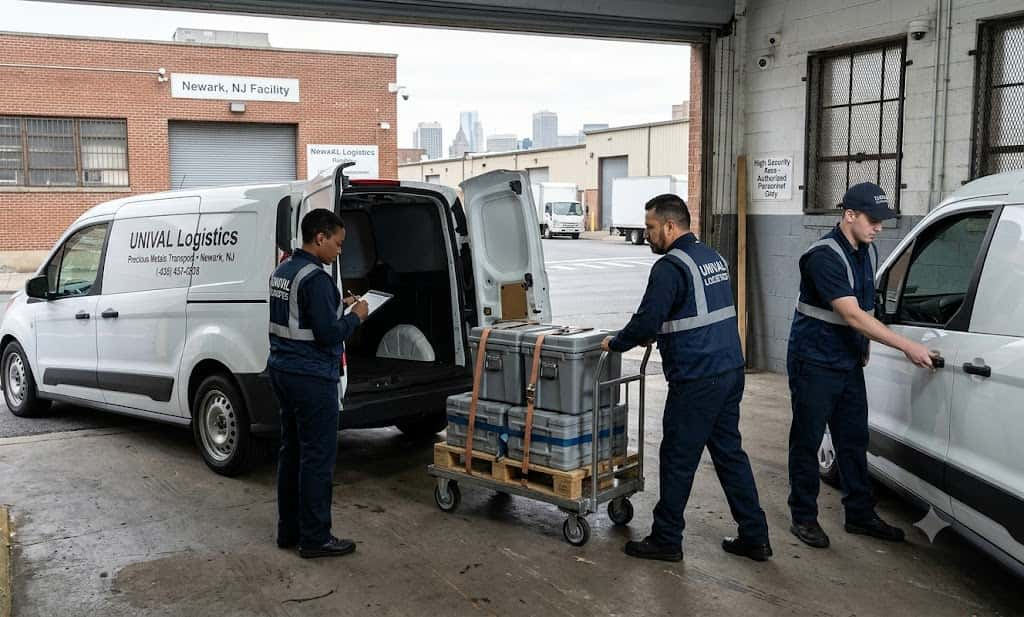
Summary: This guide explains the key steps involved in precious metals shipping, including transportation planning, carrier acceptance, packaging, insurance, documentation, security measures, and delivery verification.
Overview
Shipping precious metals requires a different level of planning from sending ordinary parcels. Gold, silver, platinum, bullion, and other high-value metals can be attractive targets for theft, while their market value may change over time. The shipment’s value, form, quantity, destination, and intended use all influence the appropriate transportation arrangements.
For businesses and individuals arranging precious metals shipping Newark NJ, the first step is to confirm that the selected carrier accepts the specific metal and shipment value. Next, establish suitable handling procedures, verify available insurance coverage, and prepare documentation that accurately reflects the contents.
UNIVAL Logistics can help shippers evaluate their transportation requirements and identify the details to confirm before booking. A well-planned shipment combines appropriate packaging, transparent insurance terms, reliable monitoring, and controlled delivery.
Key Takeaways
- Confirm carrier acceptance for the specific metal, form, and shipment value before booking.
- Review insurance coverage, exclusions, valuation rules, and claim requirements in writing.
- Use packaging that protects the metal and complies with carrier and insurer requirements.
- Maintain accurate invoices, weight records, shipment details, and proof of value.
- Arrange suitable tracking, recipient verification, and documented handover.
- Request a tailored quote because transport, insurance, packaging, and security requirements affect the total cost.
Quick Answer: To ship precious metals securely in Newark and Northern New Jersey, use a carrier that explicitly accepts the goods, verify appropriate insurance, document their value, follow packaging requirements, and arrange tracked delivery with a confirmed recipient. UNIVAL Logistics can help you evaluate the shipping requirements before dispatch.
Understanding Precious Metals Shipping in Newark and Northern New Jersey
Precious metals shipping involves transporting materials such as gold, silver, platinum, and palladium in forms that may include bullion bars, coins, industrial materials, jewelry stock, or refined metal products. The shipping requirements can vary significantly depending on the metal’s form, purity, value, packaging, and intended use.
Newark and Northern New Jersey serve a variety of commercial and distribution needs. Businesses transporting precious metals through the area should consider the entire shipment process, from collection and packaging to carrier acceptance, transit monitoring, and final delivery.
Which Precious Metals Can Require Specialized Shipping?
Gold and gold bullion: Gold bars, investment bullion, and commercial gold products may require careful valuation, restricted handling, and specialized transportation arrangements.
Silver and silver bullion: Silver bars, rounds, and other silver products can be heavy relative to their value. Secure packaging and accurate weight records are important when arranging transport.
Platinum and palladium: These metals may have substantial value and specific commercial or industrial uses. Their shipment requirements depend on the product, carrier restrictions, and applicable regulations.
Precious-metal components and industrial materials: Refined metals, manufacturing inputs, and specialized metal components may require additional product documentation or handling instructions.
Not every carrier accepts every form of precious metal. Some services exclude bullion, coins, loose precious metals, or shipments above specified value limits. Always disclose the contents accurately and obtain confirmation that the proposed service is suitable.
How to Choose a Secure Shipping Service
Choosing a provider requires more than comparing delivery speed and freight charges. Shippers should confirm the provider’s experience with the relevant commodity, the security procedures included, and the terms governing loss or damage.
Confirm Carrier Acceptance and Value Limits
Before arranging precious metals shipping Newark NJ, provide the carrier or logistics provider with a clear description of the goods. Include the metal type, form, approximate weight, declared value, packaging method, and destination.
Ask for written confirmation of any restrictions, value limits, prohibited items, and special booking conditions. A carrier may accept ordinary jewelry but exclude investment bullion, for example, so assumptions based on general service descriptions can be risky.
Evaluate Security Procedures
The appropriate level of security depends on the shipment’s value, size, route, and risk profile. Depending on the service, relevant measures may include documented custody transfers, tamper-evident packaging, restricted access, signature-controlled delivery, or dedicated transportation.
Ask which protections are included and which incur additional charges. Do not assume that a shipment is being transported in an armored vehicle or under continuous supervision unless those services have been specifically confirmed.
Check Tracking and Delivery Controls
Shipment tracking helps you follow the delivery process, but tracking alone does not prevent theft or guarantee reimbursement. For valuable metals, establish who will monitor progress and how unexpected delays, delivery exceptions, or missing scans will be handled.
Whenever possible, arrange delivery to a secure business location with an authorized recipient available to accept the shipment. Confirm whether identification, a signature, or other delivery verification is required.
Precious Metals Shipping Insurance: What You Need to Know
Insurance is an important consideration because the financial impact of losing precious metals can be substantial. However, not every shipping service provides coverage for bullion or other precious metals, and coverage may depend on strict conditions.
Understand the Difference Between Carrier Liability and Cargo Insurance
Carrier liability is governed by the applicable service terms, transport documents, and relevant law. It may be limited and may not compensate the shipper for the full value of precious metals.
Cargo insurance is a separate form of financial protection when suitable coverage is available. The policy may cover specified losses or damage, subject to its limits, exclusions, deductibles, and claim conditions.
Before booking, ask whether the policy explicitly covers the type of precious metal being shipped. Some policies exclude bullion, coins, or particular forms of high-value goods. Never assume that declaring a shipment’s value automatically creates insurance coverage.
What to Verify Before Purchasing Coverage
Review the following points with the insurer or provider:
- Eligible commodities: Confirm that the exact metal and product form are covered.
- Insured value: Determine how the value is calculated and what supporting evidence is required.
- Covered events: Establish whether theft, loss, and physical damage are covered under the policy.
- Security conditions: Check whether an approved carrier, specific packaging, signature confirmation, or other controls are mandatory.
- Exclusions and deductibles: Understand the circumstances in which a claim may be denied or reduced.
- Claim documentation: Confirm reporting deadlines and the evidence needed to support a claim.
For precious metals shipping Newark NJ, obtain written confirmation of the insurance terms before the goods are handed over. If the carrier or insurer cannot confirm coverage for the specific shipment, consider alternative arrangements before dispatch.
Establish an Accurate Shipment Value
Precious metals can fluctuate in market value. The appropriate declared or insured value depends on the transaction, the policy wording, and the valuation method accepted by the insurer.
Keep purchase invoices, inventory records, assay certificates where applicable, weight measurements, and other accepted evidence of value. For commercial shipments, ensure that the documentation matches the metal type, quantity, and actual shipment.
Do not assume that a standard purchase invoice, market quotation, or declared-value entry will automatically satisfy every insurer’s requirements.
Packaging Precious Metals for Secure Transportation
Appropriate packaging helps protect the shipment, supports accurate documentation, and may be required for insurance eligibility. The correct approach depends on the metal’s form, quantity, weight, and vulnerability to damage or tampering.
Use Strong, Suitable Packaging
Bullion bars and coins should be packaged to prevent unnecessary movement and damage during handling. Heavy metal shipments may require reinforced containers or appropriately rated outer packaging. Smaller items may need protective inner packaging that keeps the contents secure without compromising the outer container.
Follow the carrier’s packaging standards and any instructions specified by the insurer. For larger or unusually valuable shipments, ask whether professional packing or specialized containment is required.
Keep Packaging Discreet and Compliant
Discreet packaging may reduce unnecessary attention to valuable contents, but it must not conflict with carrier policies, legal requirements, insurance terms, or mandatory declarations. The information provided on shipping and customs documents must remain accurate.
Do not mislabel precious metals as ordinary merchandise to avoid restrictions or fees. Incorrect declarations can cause shipment rejection, delays, insurance disputes, or other legal and financial consequences.
Document the Shipment Before Sealing
Before dispatch, record relevant details such as:
- Metal type, quantity, weight, and identifying details where available.
- Purchase invoices, valuation records, or other accepted proof of value.
- Photographs of the items and their condition, where appropriate.
- Packaging details and shipment reference numbers.
- The sender, authorized recipient, and required delivery instructions.
Retain copies of these records in a secure location. Accurate documentation helps with reconciliation and may support an insurance claim if an incident occurs.
Documentation and Compliance Requirements
Precious metals shipments may involve commercial, tax, customs, or regulatory considerations depending on the goods and route. Requirements can differ between domestic transportation and international shipments.
Domestic Shipments
For shipments within the United States, prepare the transport documentation required by the carrier and maintain records that support the goods’ description and value. Businesses should also check whether the commodity or transaction is subject to additional requirements.
Precious metals dealers and certain transactions may be subject to specific legal obligations. The applicable rules depend on the parties, product, transaction, and circumstances, so obtain professional guidance when necessary.
International Shipments
If precious metals are crossing an international border, additional requirements may apply. These can include accurate customs declarations, commodity classification, import or export restrictions, duties or taxes, and supporting commercial documentation.
Do not assume that a carrier’s willingness to transport an item means it is automatically permitted to enter or leave a country. Verify applicable requirements before shipping and use accurate descriptions and values throughout the documentation.
Maintain a Clear Chain of Custody
A documented chain of custody records who accepted the shipment and when responsibility transferred. Depending on the service, this may include collection records, tracking events, signatures, and proof of delivery.
For high-value metals, retain the booking confirmation, shipment receipts, tracking information, and recipient acknowledgment. These records help establish what happened during transit and can be important if a loss, delay, or claim arises.
Transportation Options for Precious Metals
The most suitable transportation method depends on the metal’s value, weight, form, destination, and required delivery timeframe. Standard parcel services are not necessarily suitable for bullion, so confirm commodity eligibility before comparing service levels.
Specialized Parcel or Express Services
A parcel or express service may be appropriate for certain eligible shipments of smaller precious-metal products. However, carrier restrictions and coverage limits must be checked carefully. Some providers exclude bullion or limit the value they will accept under particular services.
Do not book solely because a service offers tracking or fast delivery. Verify that it explicitly accepts the shipment and that the insurance arrangements are suitable.
Dedicated or Specialized Transportation
For shipments with higher security requirements, dedicated or specialized transportation may be worth considering. Depending on availability, these services may provide more controlled collection, fewer transfers, or customized delivery coordination.
The term “specialized” does not automatically mean insured, continuously monitored, or theft-proof. Confirm the actual service specifications, security measures, liability terms, and additional charges before making a decision.
Freight Transportation for Commercial Quantities
Larger commercial consignments may require freight services or specialized handling arrangements. The shipper should confirm that the selected provider accepts precious metals and understands the shipment’s packaging, custody, and documentation requirements.
For heavier shipments, review loading procedures, handling responsibilities, delivery access, and insurance conditions in advance. If the carrier excludes precious metals, use a suitable alternative rather than attempting to ship the goods under a misleading description.
Precious Metals Shipping Costs in Newark and Northern New Jersey
The cost of shipping precious metals depends on more than distance. The shipment’s value, weight, dimensions, security requirements, carrier eligibility, packaging, insurance, and delivery arrangements can all affect the final quotation.
Main Cost Components
- Base transportation: Quote required. Charges depend on shipment weight, dimensions, route, delivery speed, and the selected service.
- Cargo insurance: Quote required. Premiums depend on whether the metal is eligible for coverage, its value, the policy terms, the deductible, and any applicable security conditions.
- Specialized packaging: Quote required. Reinforced containers, protective materials, professional packing, or custom crating may add to the total cost.
- Additional security and handling: Quote required. Dedicated transportation, controlled handovers, special collection, and secure delivery arrangements may involve additional charges.
- Documentation, storage, and other fees: Quote required. Depending on the shipment and route, administrative requirements, storage, waiting time, customs services, or other logistics charges may apply.
Important Disclaimer
The prices and categories above are baseline planning estimates, not guaranteed market rates or fixed quotations. Actual costs are subject to market fluctuations, supplier changes, and variable logistics fees, as well as the metal type, shipment value, carrier restrictions, insurance eligibility, and requested service level. Contact UNIVAL Logistics for the latest and most accurate prices based on your shipment’s specifications and transportation requirements.
Common Mistakes to Avoid When Shipping Precious Metals
Even a carefully selected carrier cannot eliminate every transportation risk. Several common mistakes can make a shipment harder to protect or create complications if something goes wrong.
Assuming All Shipping Insurance Covers Bullion
One of the most important mistakes is relying on a generic insurance description without confirming that precious metals are eligible. Ask for written confirmation that the exact commodity, value, and shipping method are covered.
Understating Value or Misdescribing Contents
Inaccurate shipment details can create problems with carrier acceptance, compliance, and insurance claims. Describe the contents truthfully and retain supporting evidence of value.
Using Inadequate Packaging
Packaging that is too weak for the weight or shape of the metal may fail during handling. Follow carrier instructions and obtain specialist packing advice when the shipment warrants it.
Leaving Delivery Arrangements Until the Last Minute
An unavailable recipient or an unsecured delivery location can complicate the final handover. Confirm the receiving contact, operating hours, signature requirements, and secure delivery location before dispatch.
Failing to Keep Shipment Records
Invoices, tracking details, collection receipts, and proof of delivery can be essential when investigating a discrepancy. Maintain a complete record from booking through receipt.
How UNIVAL Logistics Can Help Plan Precious Metals Shipments
Arranging precious metals transportation involves several connected decisions: selecting an eligible carrier, preparing compliant packaging, documenting value, confirming insurance, and coordinating the final handover.
UNIVAL Logistics can help shippers assess these requirements and identify the questions that need to be resolved before a booking is made. Service suitability and availability should always be confirmed for the specific metal, shipment value, route, and requested level of protection.
When requesting a quotation, prepare the metal type and form, quantity, approximate value, dimensions, total weight, collection and delivery details, and preferred delivery timeframe. Mention any special packaging, documentation, or insurance requirements. Request written confirmation of carrier acceptance and the proposed coverage terms before dispatch.
This preparation helps make the shipping arrangements clearer and reduces the risk of avoidable surprises after the shipment has been tendered.
Final Checklist Before Dispatch
Before shipping precious metals from or through Newark and Northern New Jersey, confirm that the key arrangements are in place:
- The carrier explicitly accepts the metal type, shipment value, and shipping method.
- Packaging meets the applicable carrier and insurer requirements.
- The declared contents, weight, quantity, and value are accurate.
- Insurance coverage and any exclusions or deductibles are confirmed in writing.
- Tracking and collection records are available.
- The recipient and delivery arrangements are verified.
- Invoices, valuation evidence, and shipment records are retained securely.
Frequently Asked Questions
1. What is the safest way to ship precious metals?
The safest approach depends on the shipment’s value, form, and destination. Confirm carrier acceptance, use suitable packaging, arrange appropriate insurance, maintain accurate documentation, and select delivery controls that match the risk. No shipping method can guarantee that loss or damage will never occur.
2. How do I arrange precious metals shipping Newark NJ?
Identify the metal type, quantity, value, weight, dimensions, and destination. Ask a suitable logistics provider to confirm carrier eligibility, packaging requirements, insurance options, delivery arrangements, and the total cost. UNIVAL Logistics can help you evaluate these requirements before booking.
3. Can I ship gold bars or silver bullion through a standard parcel carrier?
Not necessarily. Some carriers and service levels prohibit bullion or impose specific value and commodity restrictions. Confirm acceptance for the exact goods and service before dispatch, and do not misdescribe the shipment to bypass restrictions.
4. Does shipping precious metals automatically include insurance?
No. Standard shipping charges do not necessarily include separate cargo insurance, and some insurance policies exclude bullion or other precious metals. Confirm the applicable coverage, limits, exclusions, and claim requirements in writing.
5. What documents are needed to ship precious metals?
Requirements vary, but relevant records may include shipping documents, invoices, proof of value, weight and quantity records, and any applicable customs or regulatory paperwork. International shipments may require additional documentation based on the commodity and destination.
6. How much does it cost to ship precious metals in Newark?
Costs depend on the shipment’s weight, dimensions, value, route, insurance eligibility, packaging, and security requirements. Request a shipment-specific quotation because a generic price may not reflect the carrier restrictions or protection needed for precious metals.
7. How should precious metals be packaged?
Use strong, appropriate packaging that prevents unnecessary movement and protects the contents during handling. Follow carrier and insurer instructions, use specialized packing when required, and ensure all shipping declarations remain accurate.
8. Can precious metals be shipped internationally?
International transportation may be possible when the carrier accepts the goods and all relevant import, export, customs, and regulatory requirements are met. Confirm restrictions and documentation requirements for both the origin and destination before dispatch.
9. What should I do if a precious metals shipment is lost or damaged?
Contact the carrier and applicable insurer or service provider promptly, following their reporting deadlines. Preserve packaging and supporting records, document any damage, and gather invoices, shipment receipts, tracking details, and proof of value. Claim eligibility depends on the applicable terms and evidence.
10. How can UNIVAL Logistics help with precious metals shipping?
UNIVAL Logistics can help you assess shipping requirements, identify the information needed for a quotation, and clarify questions about transportation, handling, insurance, and delivery. Confirm service availability, carrier acceptance, and insurance terms for the specific shipment before dispatch.
Conclusion
Shipping precious metals requires careful attention to carrier restrictions, packaging, valuation, insurance, and delivery security. For businesses and individuals arranging precious metals shipping Newark NJ, preparation is essential: verify that the goods are accepted, document their value accurately, and confirm the transportation and insurance terms before dispatch.
UNIVAL Logistics can help you evaluate the requirements and plan the next steps for your shipment. A well-organized process supports better visibility, clearer responsibilities, and more informed decisions when transporting valuable metals.